
PPID in Horses: When Should You Suspect It?
Dr Brianna Clark Equine Internal Medicine Specialist
Pituitary pars intermedia dysfunction (PPID), previously known as equine Cushing’s disease, is one of the most common endocrine disorders affecting older horses and ponies.
But PPID does not always look the way you might expect.
Consider these horses:
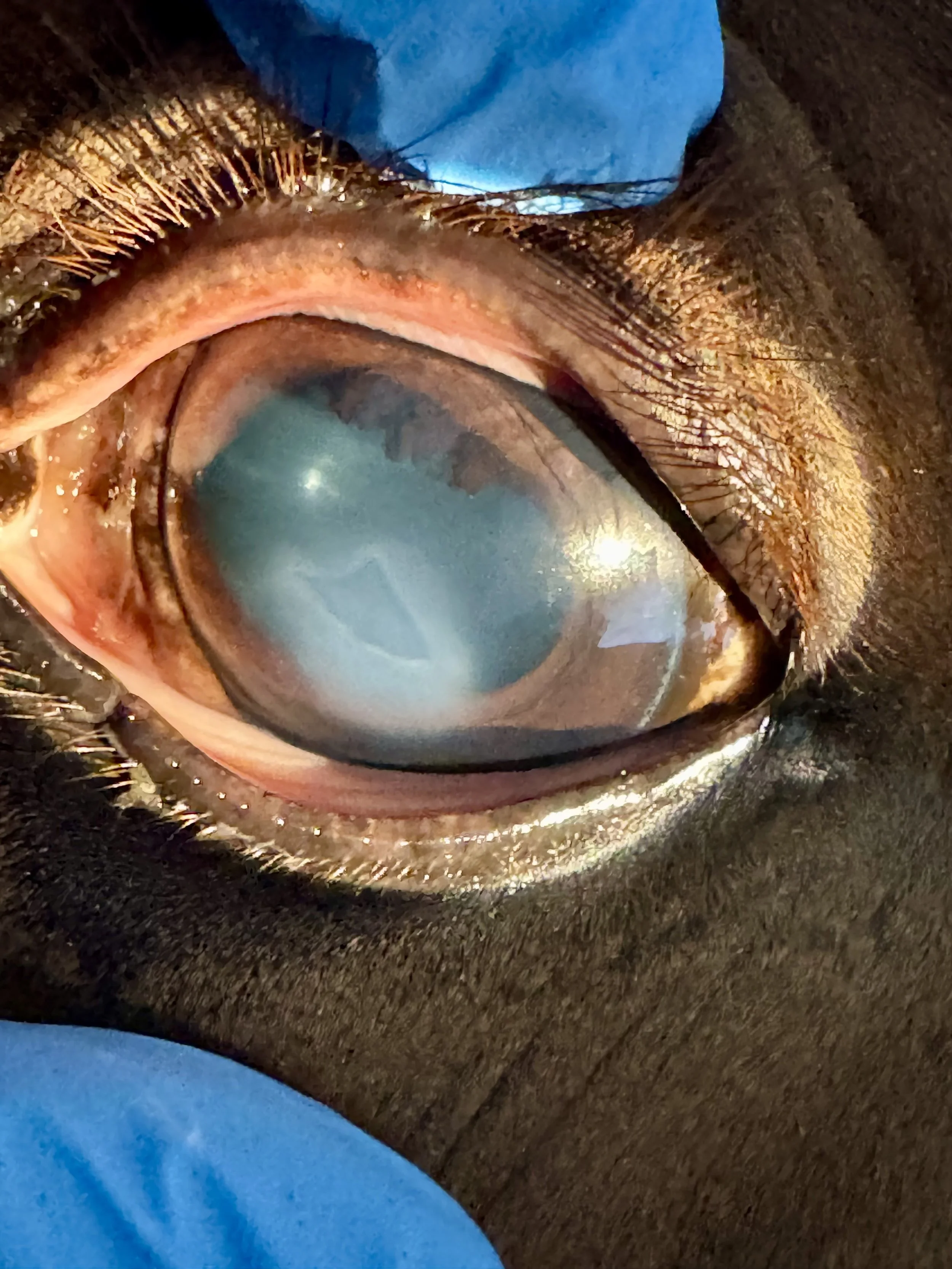
Non-healing corneal ulcer
The horse with recurrent eye problems
A middle-aged horse has had repeated corneal ulcers and seems to take longer than expected to recover from infections and injuries.
Could there be more going on than just bad luck?
The competition horse losing muscle
A high-level dressage horse is still working well, but is progressively losing topline and muscle despite an appropriate diet and training program. The horse has also developed recurrent suspensory ligament problems.
PPID can sometimes present with subtle changes in muscle condition and performance before the classic signs become obvious.
The pony with “uncontrolled” EMS
A 15-year-old pony is on a carefully managed, low-sugar diet and has appropriate exercise and weight management, yet continues to have evidence of insulin dysregulation.
Could PPID be contributing?
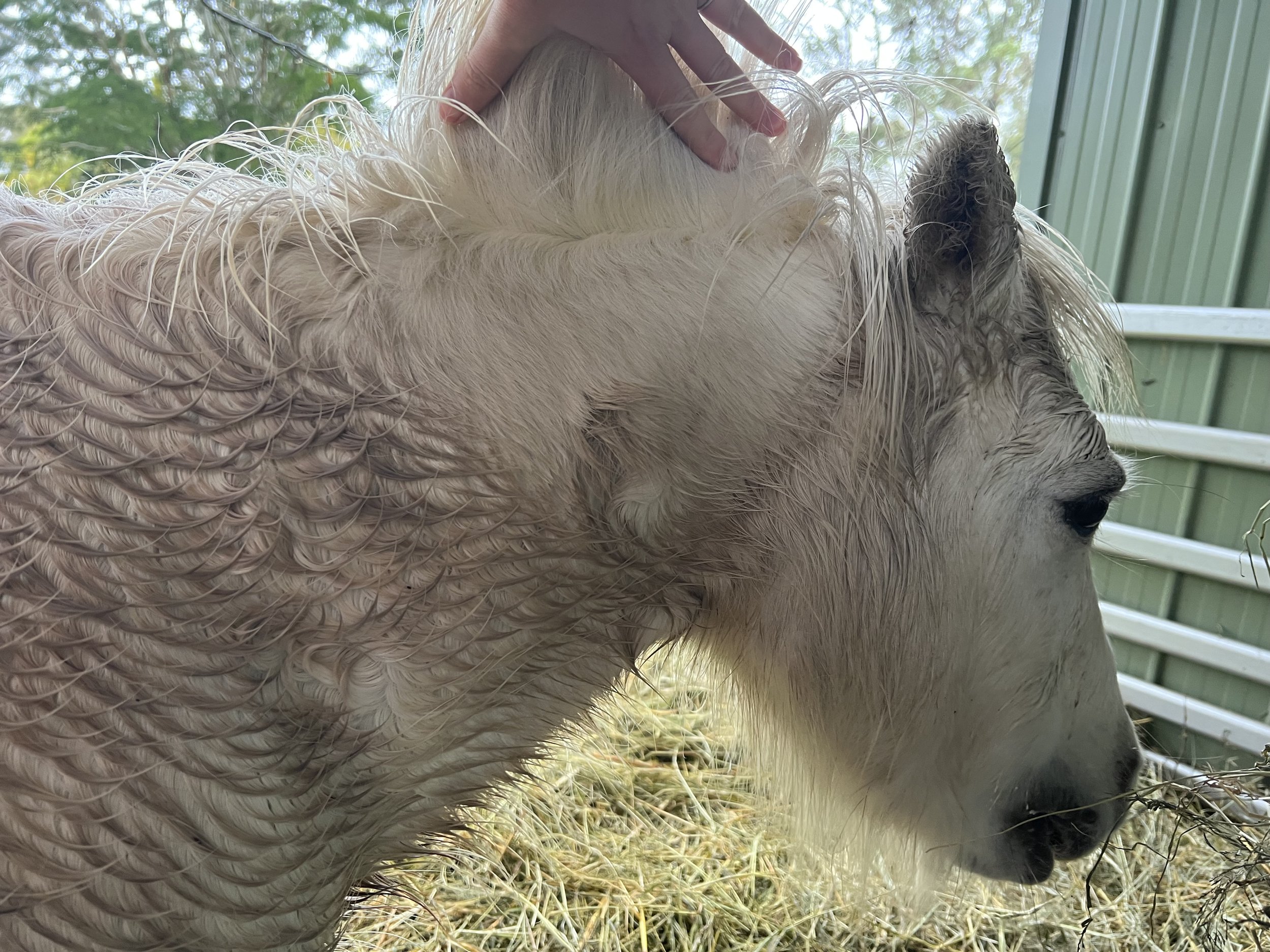
Pony with hypertrichosis
PPID and insulin dysregulation can occur together, and identifying both conditions is important when assessing a horse at risk of laminitis.
The older horse that won’t shed his hair coat
A horse in its twenties develops an increasingly long, thick or curly hair coat and fails to shed normally in spring.
This is one of the classic signs of PPID and should prompt investigation.
What is PPID?
PPID occurs when age-related changes in the horse’s pituitary gland result in abnormal production of hormones, particularly adrenocorticotropic hormone (ACTH).
These hormonal changes can affect multiple body systems, including metabolism, immune function, muscle condition, sweating and the hair coat.
PPID is a progressive condition, and the clinical signs can vary considerably between horses. Early disease may be subtle, while more advanced disease can result in much more obvious changes.
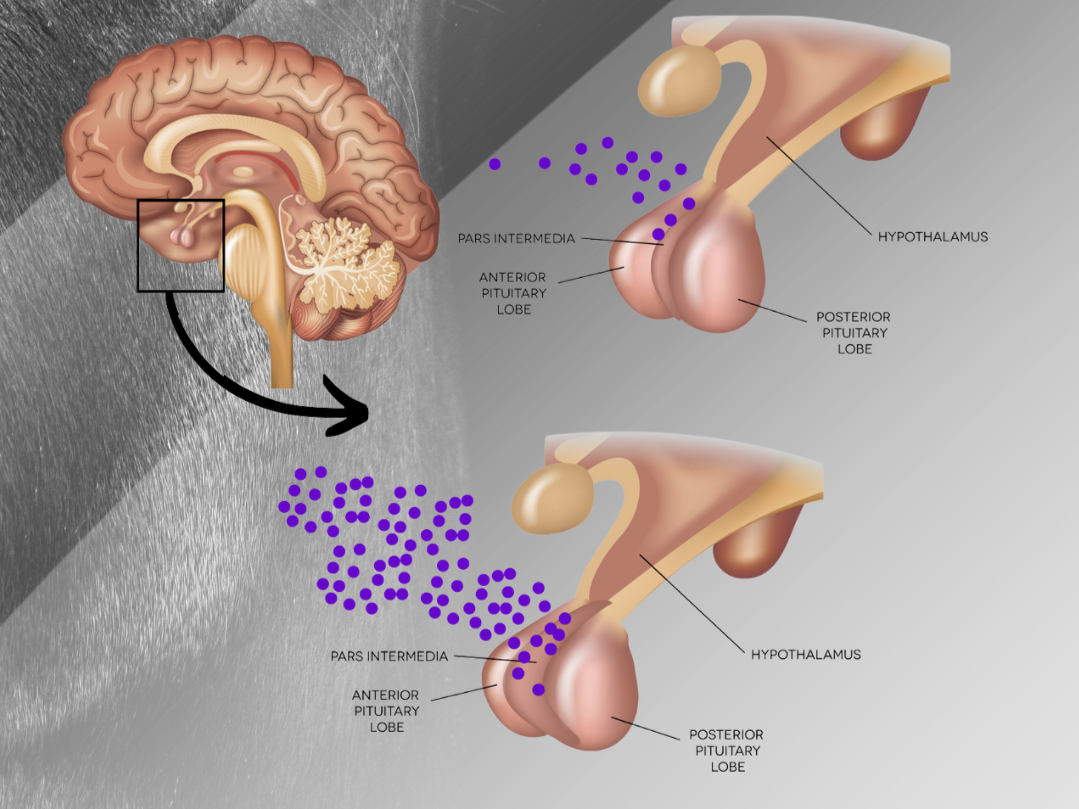
Diagram showing changes at the hormones.
When should you suspect PPID?
PPID is primarily a disease of older horses and ponies and is very uncommon in horses younger than 10–12 years.
Importantly, we do not recommend testing every older horse for PPID simply because of its age.
The decision to investigate PPID should be based on the horse’s age together with its clinical signs and overall clinical picture.
What are the signs of PPID?
The most characteristic sign is an abnormal hair coat.
Signs that strongly increase suspicion of PPID
A long, curly or abnormal hair coat (hypertrichosis)
Delayed, incomplete or abnormal shedding
Other signs that may increase suspicion include:
Loss of topline or muscle mass
Weight loss
Recurrent or opportunistic infections
Delayed or poor wound healing
Recurrent or chronic laminitis
Increased drinking and urination
Lethargy or changes in behaviour
A pot-bellied appearance
Abnormal fat distribution
Abnormal sweating
Importantly, many of these signs have other possible causes. The combination of signs, age and the individual horse's history is therefore important when deciding whether PPID testing is appropriate.
How is PPID diagnosed?
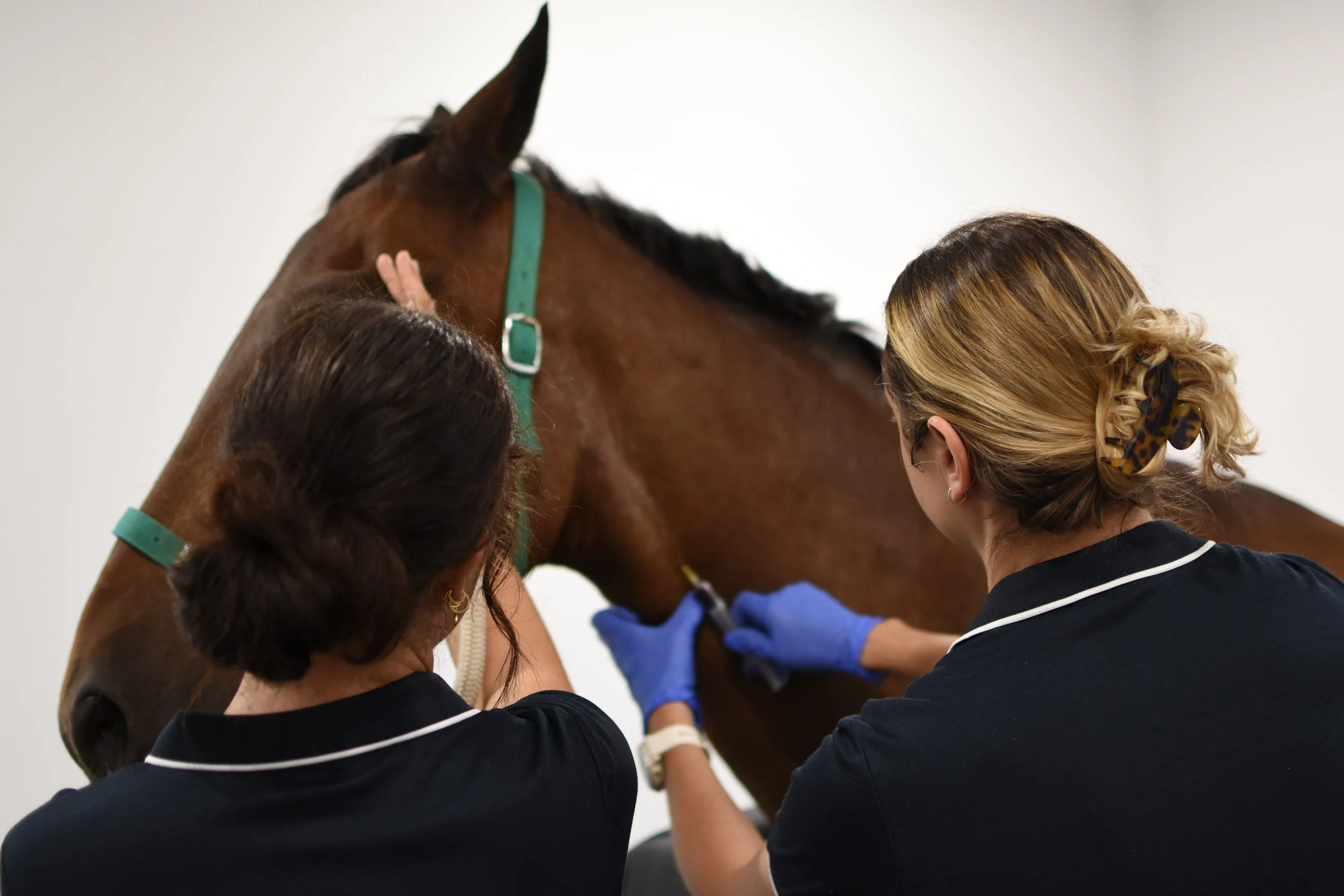
Obtaining blood for a blood test
There is an important distinction between recognising PPID clinically and confirming or investigating the diagnosis with laboratory testing.
A horse with classic hypertrichosis has a very high likelihood of having PPID. In these horses, the clinical appearance can be sufficient to make a diagnosis, although your veterinarian may still recommend blood testing to establish a baseline and assist with ongoing management.
In horses without the classic hair coat changes, diagnostic testing can be useful when the overall clinical picture creates sufficient suspicion of PPID.
The most commonly used tests measure adrenocorticotropic hormone (ACTH), either as a resting ACTH concentration or following stimulation with thyrotropin-releasing hormone (TRH).
Your veterinarian will determine which test is most appropriate based on your horse's clinical signs, age and the time of year.
Why shouldn’t every horse be tested?
This is an important part of diagnosing PPID.
Although PPID becomes increasingly common with age, testing a horse with a low likelihood of disease increases the chance of obtaining a misleading or false-positive result.
For this reason, blanket screening of horses for PPID is not recommended.
Instead, your veterinarian will consider:
The horse's age
Current and previous clinical signs
The strength of suspicion for PPID
Other possible causes of the horse's signs
The time of year
The specific test being used
This approach helps ensure that test results are interpreted in the correct clinical context.
Why does the time of year matter?
ACTH concentrations naturally change throughout the year, with a pronounced seasonal increase during late summer and autumn.
This means that ACTH results cannot simply be classified as “normal” or “abnormal” without considering the season, laboratory and assay being used.
Other factors, including breed, location, diet, transport and illness, can also influence ACTH concentrations.
Your veterinarian will take these factors into account when interpreting the result.
What about PPID and EMS?
PPID and equine metabolic syndrome (EMS) are different endocrine disorders, but they can occur together. Read more about EMS here.
Some horses with PPID also have insulin dysregulation. This is particularly important because hyperinsulinaemia is an important risk factor for laminitis.
If an older horse or pony has signs such as laminitis, abnormal fat distribution or insulin dysregulation, your veterinarian may recommend assessing both PPID and insulin regulation.
Treating PPID does not necessarily correct insulin dysregulation. Dietary management, appropriate exercise and weight management may still be required.
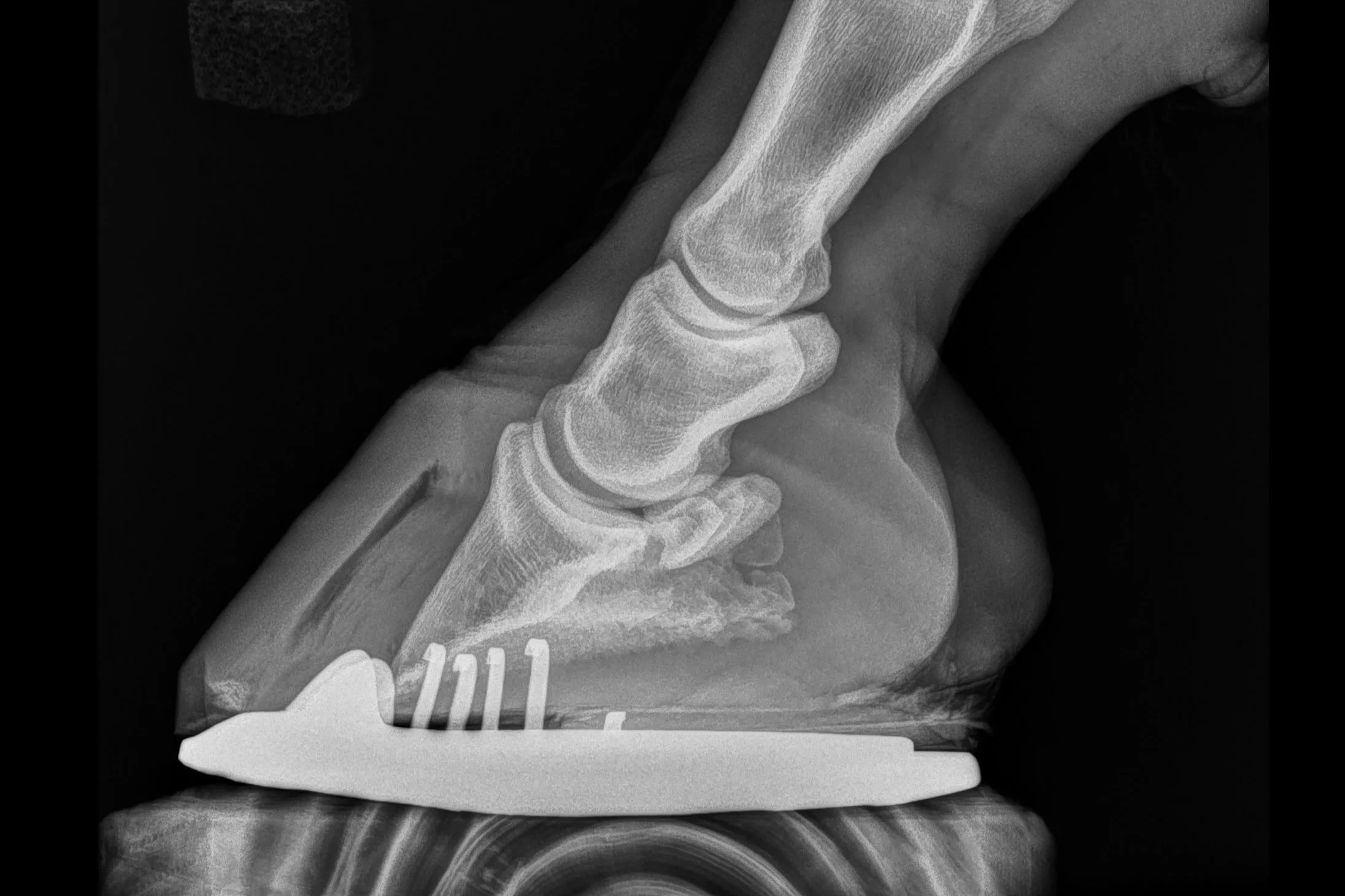
Horse with laminitis
How is PPID treated?
PPID is a lifelong condition, but it can be successfully managed in many horses.
The main treatment is pergolide, a medication that helps regulate abnormal pituitary hormone production.
Treatment is individualised according to the horse's clinical signs, diagnostic results and response to treatment.
Some horses experience a temporary reduction in appetite when pergolide is first introduced. Your veterinarian can advise you on how best to introduce and manage treatment.
Does treatment mean my horse is cured?
No. PPID is a chronic, progressive disease and treatment does not reverse the underlying changes in the pituitary gland.
The aim of treatment is to reduce the effects of the disease and maintain your horse's health, comfort and quality of life.
Ongoing monitoring is an important part of management and may include reassessment of clinical signs and repeat endocrine testing.
Managing the whole horse
Medication is only one part of managing a horse with PPID.
Depending on the individual horse, management may also include:
Monitoring carefully for laminitis
Regular hoof care and farriery
Assessment and management of insulin dysregulation
Appropriate nutrition and weight management
Dental care
Vaccination and preventative healthcare
Appropriate parasite control
Prompt investigation of infections or delayed wound healing
Exercise appropriate for the horse's age, soundness and overall health
When should you talk to your veterinarian about PPID?
Talk to your veterinarian if your horse develops:
A long, curly or abnormal hair coat
Delayed or incomplete shedding
Unexplained loss of muscle or topline
Recurrent infections or wounds that heal slowly
Recurrent or unexplained laminitis
Increased drinking or urination
Multiple unexplained health problems as your horse ages
Insulin dysregulation that is difficult to manage
You do not need to wait until your horse develops a classic curly coat to discuss PPID.
However, PPID testing should be targeted to horses where the clinical signs and age make the disease sufficiently likely, rather than used as a blanket screening test.
At Sunshine Coast Equine Hospital
At SCEH, we take a whole-horse approach to endocrine disease.
If you are concerned that PPID, insulin dysregulation or another endocrine disorder may be contributing to changes in your horse’s health or performance, our veterinarians can assess your horse and recommend an appropriate diagnostic and management plan.
Early recognition and appropriate management can make a significant difference to your horse’s long-term health and quality of life.
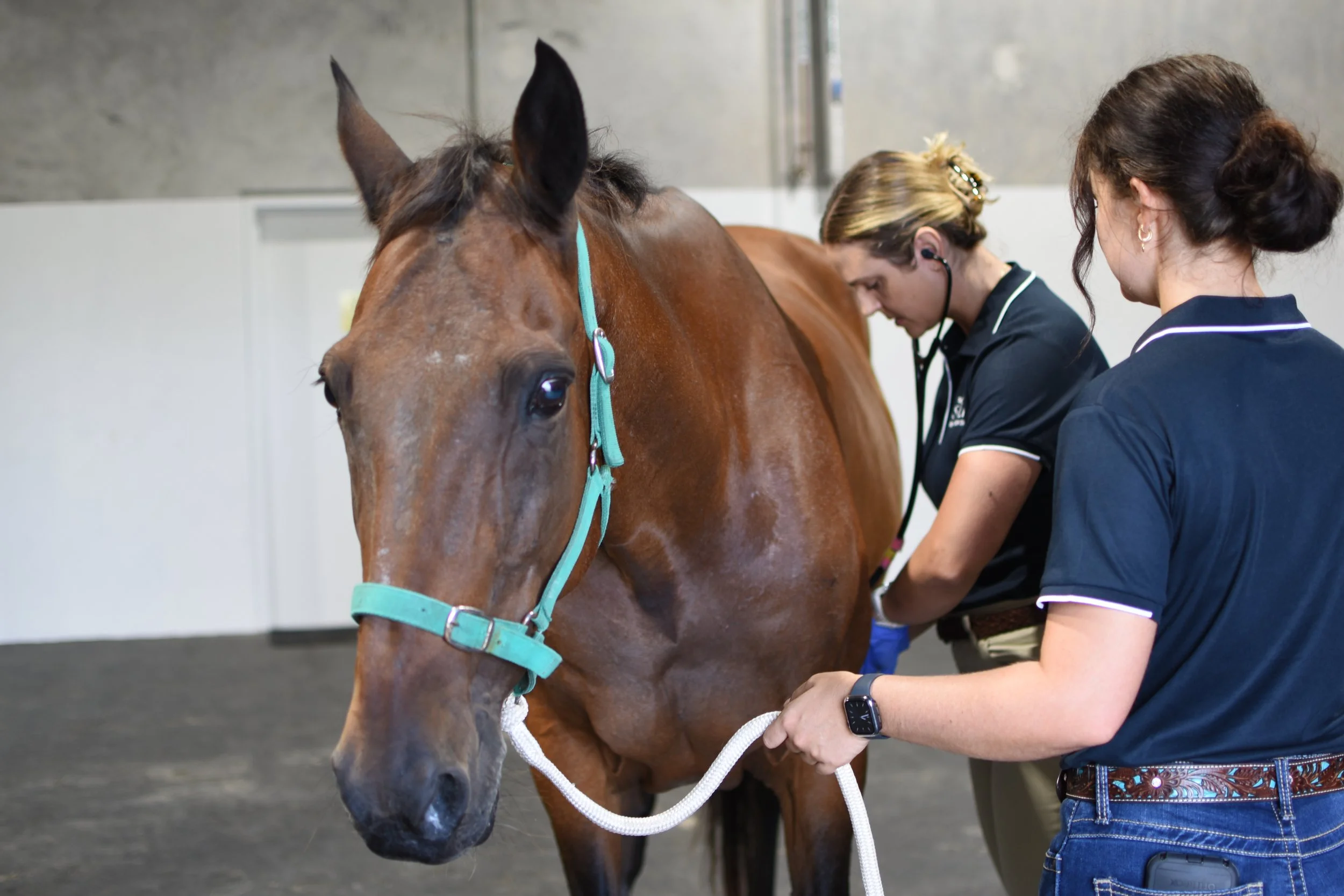
Dr Brianna performing a physical exam on an older horse