
Newsletter - May ‘26
The team has seen a variety of interesting cases through the hospital this month, from eye cases requiring weeks of dedicated treatment to complex standing surgeries. Read on to see what’s been happening at Sunshine Coast Equine Hospital.
Paddington Bear and melanoma surgery
Recently, we welcomed a very special patient to SCEH - Paddington Bear, a 14-year-old Percheron gelding with an important job as a reliable steed for Samford Riding for the Disabled (RDA).
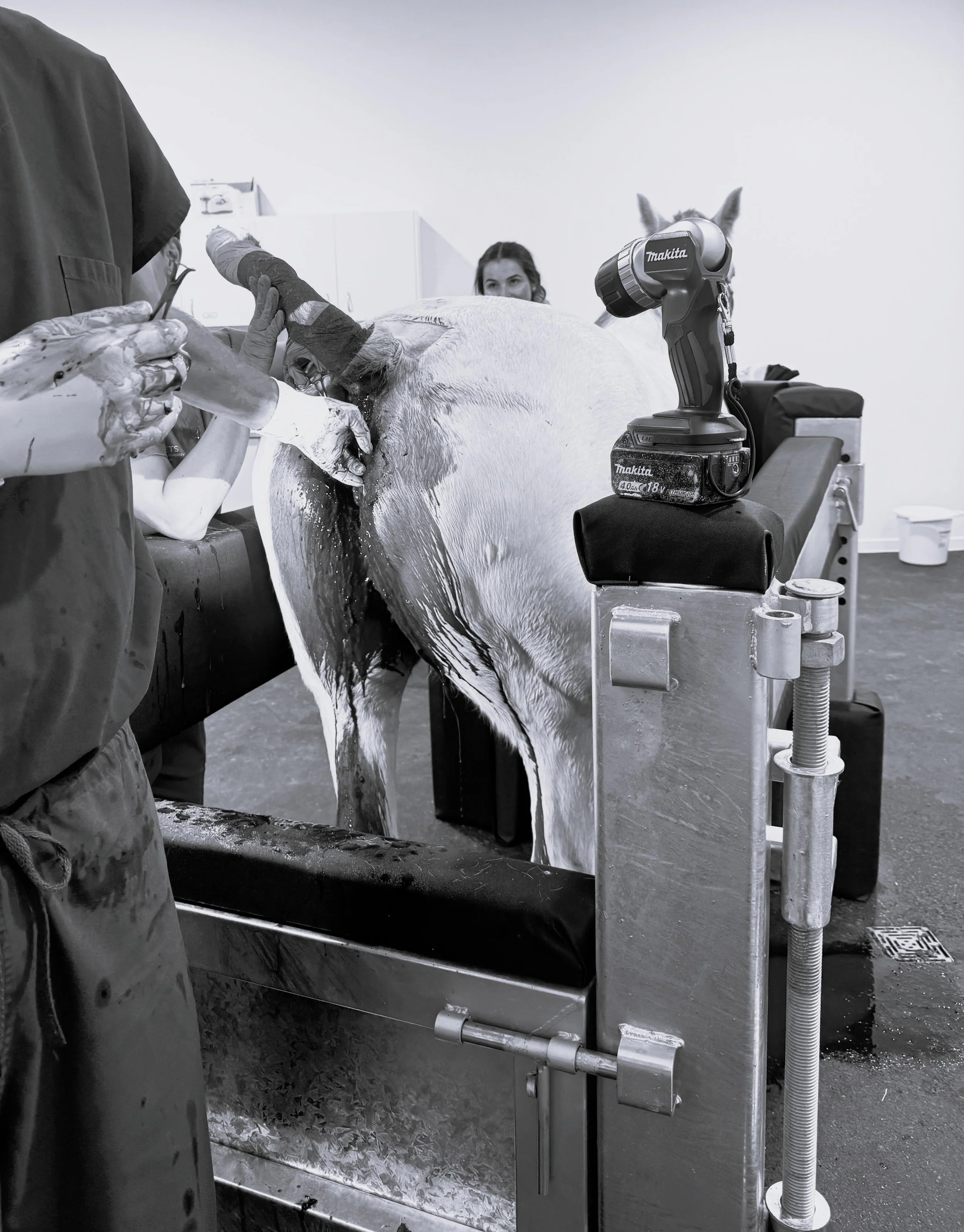
Paddington undergoing standing surgery
Paddington was referred to us for assessment of melanomas around his rectal region that had grown to the point where they were beginning to interfere with defecation.
Grey horses are particularly predisposed to developing melanomas due to inherited genetic changes associated with coat colour. Interestingly, unlike many melanomas in people, sun exposure is rarely the cause in horses. While many equine melanomas remain slow-growing and relatively benign for years, others can become larger, invasive, and problematic depending on their location.
After assessment by Dr Tias Murrlink and Dr Bridget Nottle, it was determined that one melanoma located internally within the rectum was the main contributor to Paddington’s clinical signs. Paddington underwent standing surgery, with an epidural placed to ensure he remained comfortable throughout the procedure. He tolerated surgery well, and a large melanoma was successfully removed, see pictures below.
Paddington remained in hospital afterwards so we could closely monitor healing and ensure he was passing manure comfortably again, which he was able to do much more normally after surgery.
To further support long-term management, Paddington has also commenced a course of melanoma vaccinations aimed at slowing progression and reducing growth of remaining tumours.
We’re very pleased that after recovery, Paddington can return to his important role helping riders at RDA.
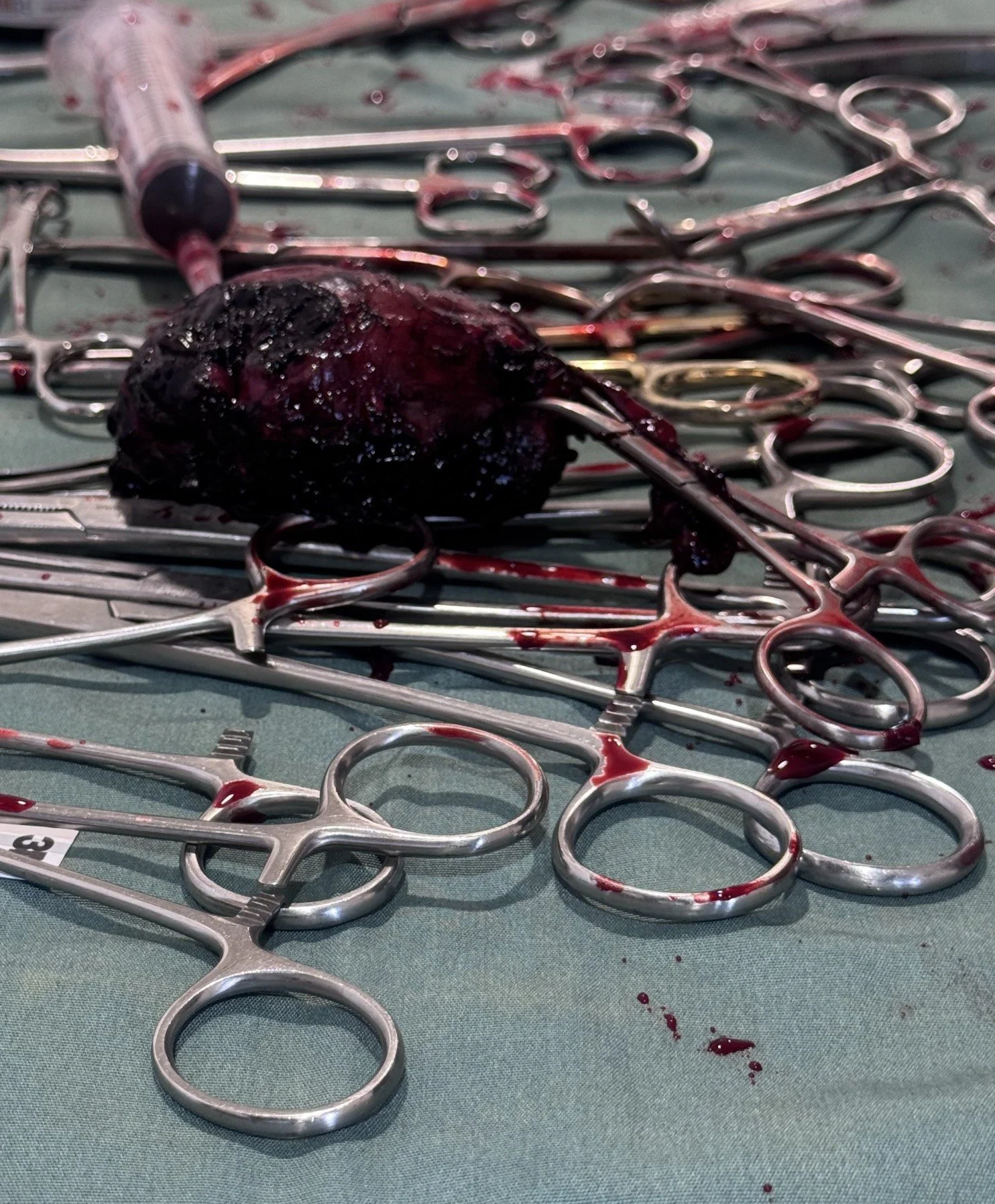
Picture of the removed melanoma
A stubborn eye ulcer and the power of a diamond burr
This month, Dr Brianna Clark treated an 8-year-old Warmblood gelding with a corneal ulcer that simply refused to heal.
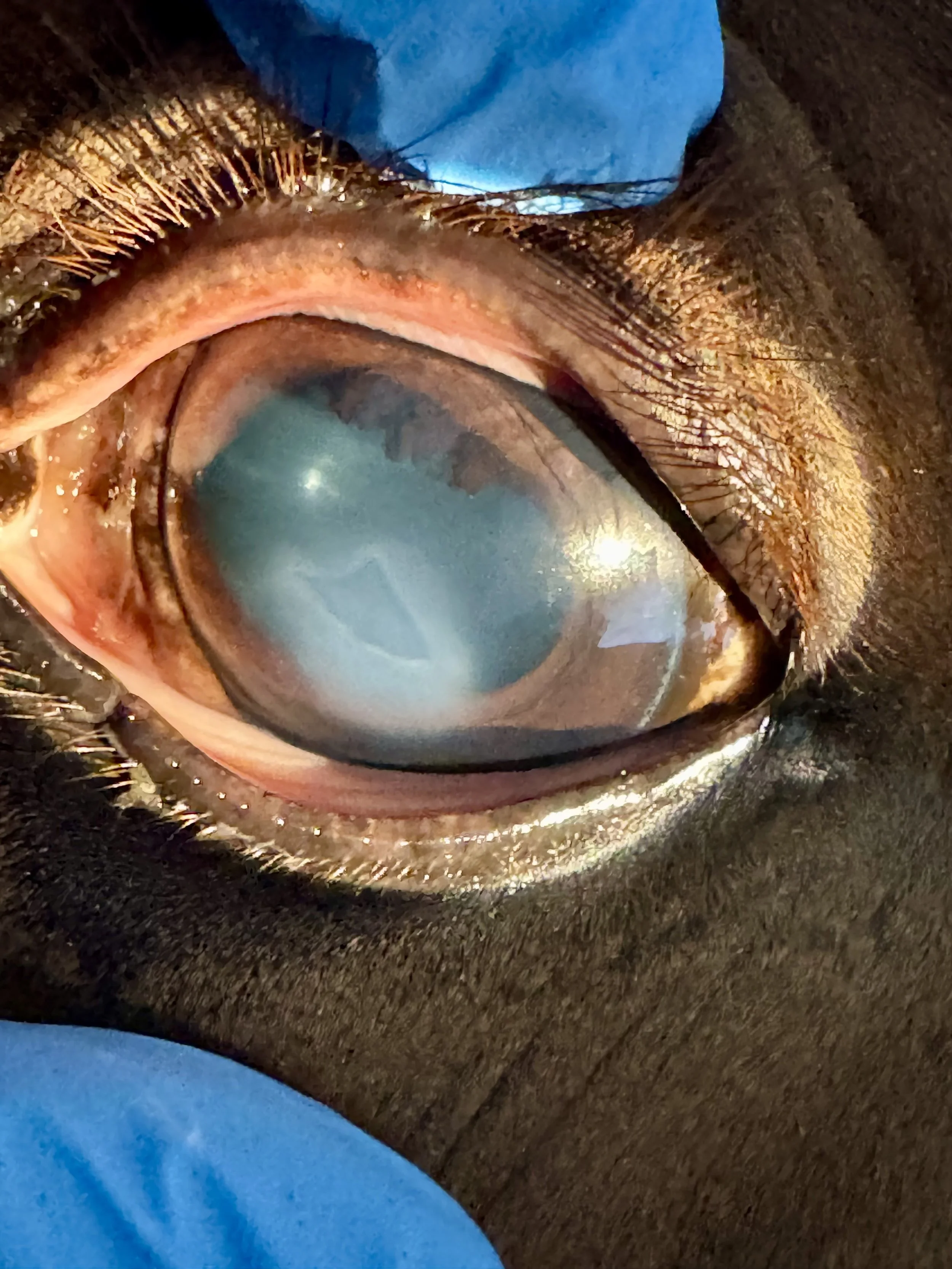
Superficial corneal ulcer with underrun edges
The ulcer had already been present for a few weeks before presentation and was becoming increasingly difficult to medicate at home - something many horse owners can sympathise with. Horses are remarkably strong when they decide they don’t want eyes medicated multiple times a day.
On examination, the gelding was found to have a superficial corneal ulcer with loose, undermined edges that peeled away easily during debridement. Samples taken from the ulcer also grew a mixture of bacteria, adding another layer of complexity to treatment.
A subpalpebral lavage system, often shortened to an SPL, was placed to make treatment safer and less stressful for both horse and owner. This system allows medications to be administered through a small tube positioned beneath the eyelid, avoiding the need to manually open a painful eye every few hours.
Eye cases can test everyone’s patience. Healing is often slow, and some ulcers require weeks, occasionally even months, of dedicated treatment and monitoring.
Despite regular treatment and repeat debridements, the ulcer edges continued to appear unhealthy and unstable. Because of this, Dr Brianna elected to perform a diamond burr debridement. This procedure removes unhealthy surface tissue and creates a healthier bed for new corneal cells to properly attach and heal.
The procedure was performed standing under sedation with nerve blocks and local anaesthesia, and the gelding responded extremely well. After continued intensive treatment and frequent rechecks, the ulcer went on to heal completely.
A fantastic outcome for both horse and owner, and a great example of how persistence and specific, tailored treatments, often pays off with eye cases.
Kissing spines – more than just a “behaviour issue”
Daphne, an 8-year-old Australian Stock Horse mare, came to see Dr Bridget Nottle this month for investigation of subtle performance concerns and lameness.
Her owner had noticed a few “niggles” both under saddle and on the ground, small changes that can sometimes be easy to dismiss but are often important early clues.
Following a thorough musculoskeletal examination, radiographs of Daphne’s thoracic and lumbar spine revealed changes consistent with overriding dorsal spinous processes, more commonly known as kissing spines.
Kissing spines occur when the bony projections extending upward from the vertebrae become too close together or overlap, leading to pain and inflammation within the back. Horses can present in many different ways, including poor performance, resistance under saddle, stiffness, behavioural changes, or difficulty engaging correctly during work.
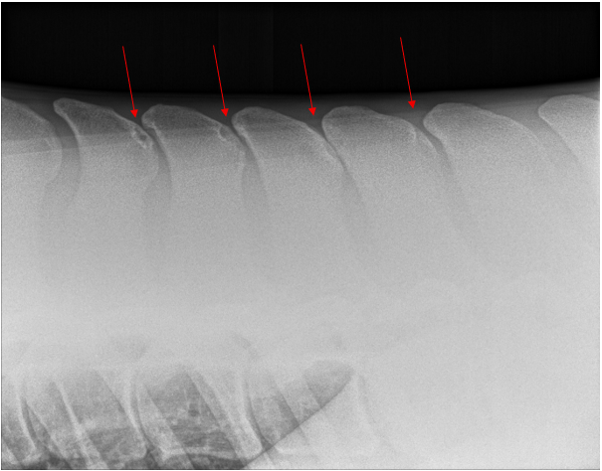
Radiograph showing impinging dorsal spinous processes (‘kissing spines’)
After discussing the findings and treatment options, the decision was made to proceed with standing surgery to remove the impinging bone and associated tissue. The procedure was performed under local anaesthesia with radiographic guidance.
Daphne recovered very well from surgery and has now started her rehabilitation and physical therapy program. This stage is incredibly important, as successful long-term outcomes rely not only on surgery itself but also on careful strengthening and rebuilding afterwards.
Her case is a great reminder that subtle changes in performance are often worth investigating early, particularly when attentive owners notice things are “just not quite right.”
It’s been another rewarding month for the SCEH team, and we’re grateful to continue working alongside such dedicated owners, riders, and referring veterinarians.
We look forward to sharing more interesting cases and educational insights with you next month.