
Newsletter - March ‘26
Reflection on our first month at Sunshine Coast Equine Hospital
What a milestone for the team at Sunshine Coast Equine Hospital, one month since opening our doors and welcoming our very first patients. The excitement is still very real. It’s been a busy few weeks behind the scenes as we’ve built our team dynamic, refined our protocols, and focused on delivering a consistently high standard of care to every horse that walks through the hospital.
We’ve already seen a wide variety of cases, and each one has played a part in shaping this first chapter. Here’s a glimpse into a few of the patients who made our first month so memorable.
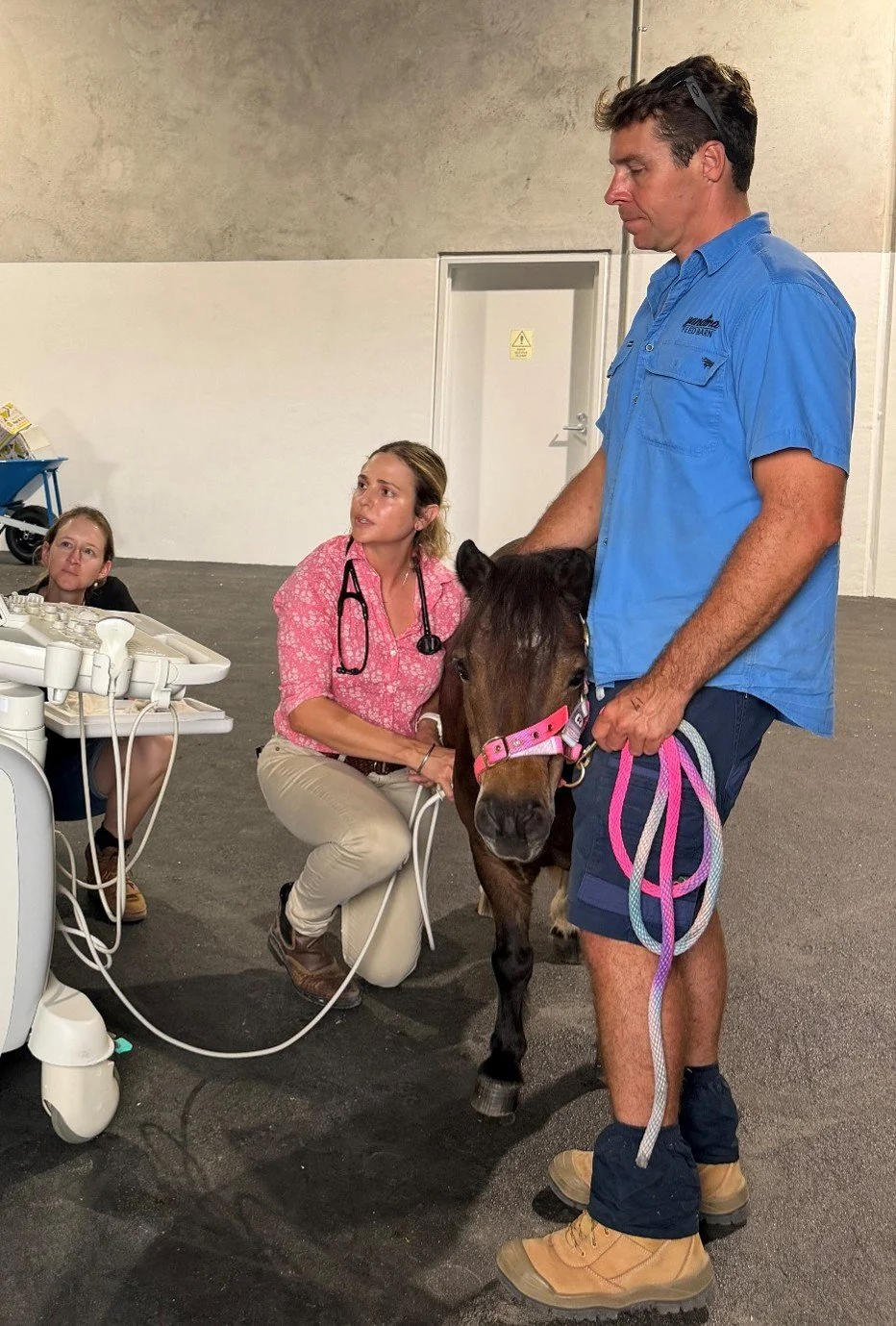
Dr Brianna performing a thoracic ultrasound on Heidi
Heidi – managing multiple conditions in an older pony
Heidi was our very first case, a 31-year-old Shetland pony who might be older on paper but certainly is young at heart. She came to us with a history of chronic, worsening respiratory signs that had started to impact her comfort day-to-day.
She was assessed by our internal medicine specialist, Dr Brianna Clark, and underwent a thorough work-up including lung ultrasound, upper airway endoscopy, and a bronchoalveolar lavage (lung wash). These findings led to a diagnosis of severe equine asthma alongside a collapsing trachea. Equine asthma is a chronic inflammatory condition of the lower airways, often triggered by environmental factors such as dust, mould, and stable air quality. In more advanced cases, horses can develop an increased breathing effort even at rest, which was something Heidi’s owners had begun to notice.
Treatment usually involves improving the horse’s environment and using anti-inflammatory medications to reduce airway inflammation. In many cases, corticosteroids are the most effective option. However, Heidi’s case required a much more careful approach. Given her age and breed, there was concern about the risk of laminitis, a painful and potentially serious condition affecting the feet that can be triggered in susceptible horses.
Further testing confirmed that Heidi also had PPID and Equine Metabolic Syndrome. Both of these conditions affect hormone and insulin regulation and significantly increase the risk of laminitis. This meant her treatment plan needed to be carefully balanced and closely monitored.
With a tailored approach, Heidi has made a good improvement and is now back to a normal respiratory rate. Cases like hers are a good reminder that there is often more than one piece to the puzzle.
Cooper – the missing testicle
Cooper, a three-year-old Warmblood, came in under the care of our specialist surgeon, Dr Tias Muurlink, for cryptorchid surgery.
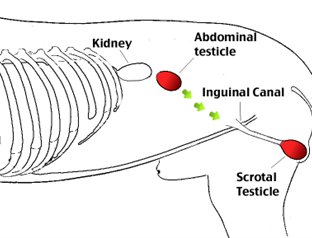
Diagram showing the possible locations of an undescended testicle.
He was what we call a cryptorchid, meaning one of his testicles had not descended into the scrotum as expected. In these cases, the retained testicle can be located anywhere from near the kidney down to the inguinal canal. While it may be hidden, it is still hormonally active, which is why these horses often continue to display stallion-like behaviour.
Unlike a routine castration, this procedure can be more complex and sometimes requires a longer anaesthetic or even keyhole surgery (laparoscopy) if the testicle is located within the abdomen. In Cooper’s case, Dr Tias Muurlink was able to locate the retained testicle within the inguinal canal, which meant a more invasive abdominal approach was not required.
This made for a smoother procedure and recovery, and a great outcome for both Cooper and his owners.
Sam – tackling a tricky sarcoid
Sam, a ten-year-old Warmblood gelding, presented to our specialist surgeon Dr Bridget Nottle for evaluation of a sarcoid located in the groin region.
Sarcoids are the most common skin tumour in horses and are known for their unpredictable behaviour. Some remain small and unchanged, while others can become more aggressive, ulcerated, or prone to regrowth after treatment. Their behaviour can vary not only between horses, but even between different lesions on the same horse.
Because of this, treatment decisions are always made on a case-by-case basis. After discussing the options, Dr Bridget Nottle and Sam’s owners elected to proceed with standing surgical removal combined with local chemotherapy to help reduce the risk of recurrence.
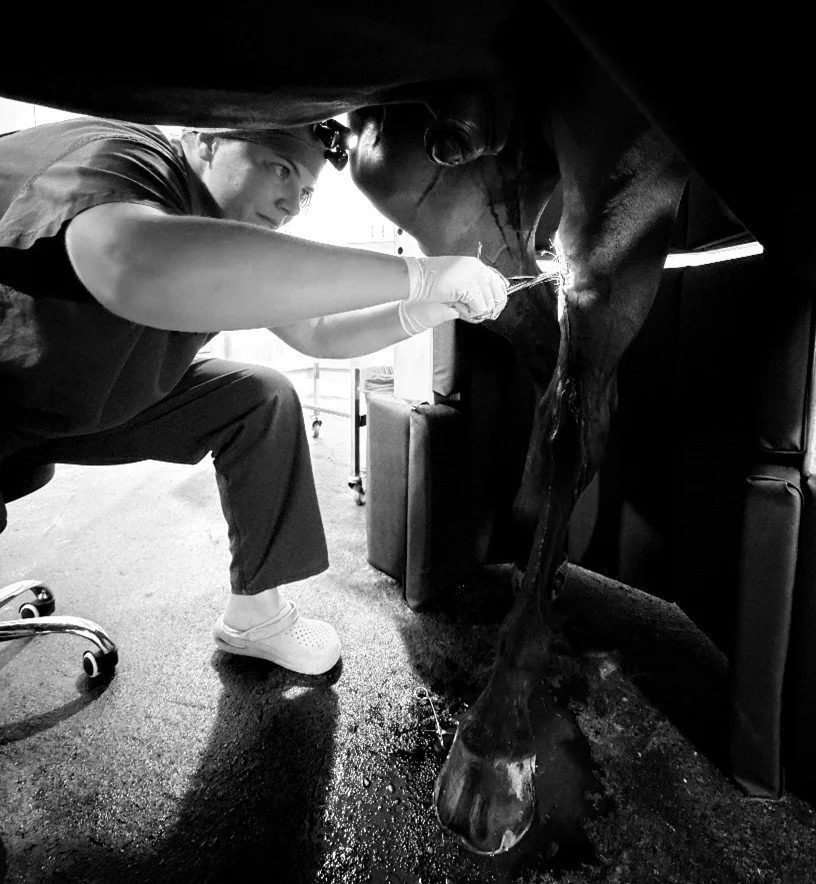
Dr Bridget removing the sarcoid from Sam’s inner thigh area.
The groin is a particularly sensitive area to manage these lesions, so early and proactive treatment gives Sam the best chance of a good long-term result.
EORTH – a painful condition hiding in plain sight
One of the more quietly rewarding cases this month involved an older gelding who underwent complete incisor removal due to EORTH, managed by our Dr Tias and Dr Bridget.
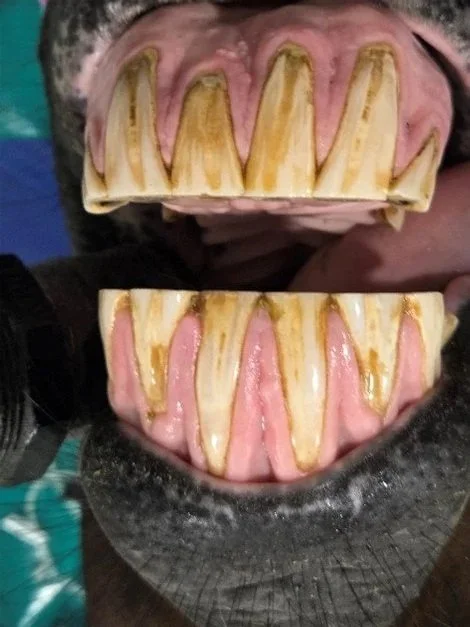
Image showing the mostly normal external appearance of the incisors
EORTH is a progressive dental condition affecting the incisors, most commonly in middle-aged to older horses. One of the challenges with this disease is that the visible part of the teeth can appear relatively normal, while significant and painful changes are occurring below the gumline at the level of the tooth roots.
Owners may notice subtle changes at first, such as difficulty biting into food, changes in eating behaviour, or gradual weight loss. Over time, the discomfort can significantly affect a horse’s quality of life.
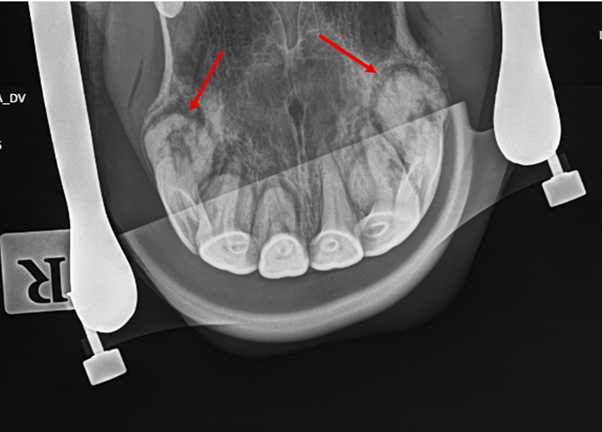
Radiograph showing the severity of disease of the gelding’s incisor roots (arrows)
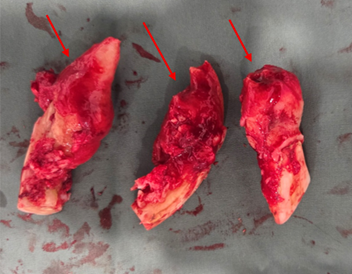
Incisors after removal showing severely diseased and thickened roots (arrows)
Although removing all of the front teeth can sound like a big step, it is often the most effective way to relieve pain in advanced cases. Horses tend to adapt very well and are usually much more comfortable afterwards.
This patient has recovered well and is already showing signs of being brighter and more comfortable, which is always the goal.
In just one month, we’ve had the opportunity to work with a wide range of horses and collaborate closely with both local veterinarians and owners. It has been a rewarding and exciting start, and we’re only just getting going.
We’re looking forward to sharing more cases, insights, and practical information with you as we continue to grow here on the Sunshine Coast.